


Kinesiology support for infertility and endometriosis
During my path as a kinesiologist, I have had the opportunity to support many women wishing to conceive or living with endometriosis. I spent in particular a year at the EGG centre in Nice, which specialises in this type of support. Kinesiology is especially relevant here because it combines the psycho‑emotional dimension (belief systems, fears, inner conflicts...) with the physical body (abdominal muscles, pelvic floor muscles, fascia and affected organs). It can also explore transgenerational memories often involved when it comes to starting a family.
Infertility and endometriosis in France
Infertility affects one couple in 6
In France, it is estimated that around one couple in six experiences difficulty conceiving, which represents about three million people affected by infertility. Infertility affects both men and women, with a relatively even distribution between the two.
Infertility can be caused by many factors, such as age, hormonal disorders, gynaecological or urological conditions, ovulation disorders, sperm‑related issues, or lifestyle factors (smoking, obesity, stress, etc.).
There are many options available to help infertile couples conceive, ranging from simple medical treatments (ovarian stimulation, artificial insemination) to more complex assisted reproductive techniques (IVF, ICSI, donation of sperm or eggs). It is therefore important for people affected by infertility to consult a specialist doctor in order to find the best‑suited solution for their situation.
Endometriosis : 1 woman in 10
In France, endometriosis is often underdiagnosed and poorly managed. According to EndoFrance, around one woman in ten of reproductive age is affected by this chronic gynaecological disease.
Endometriosis is a condition in which tissue similar to the lining of the uterus (called the endometrium) develops outside the uterus, most often in the pelvic cavity.
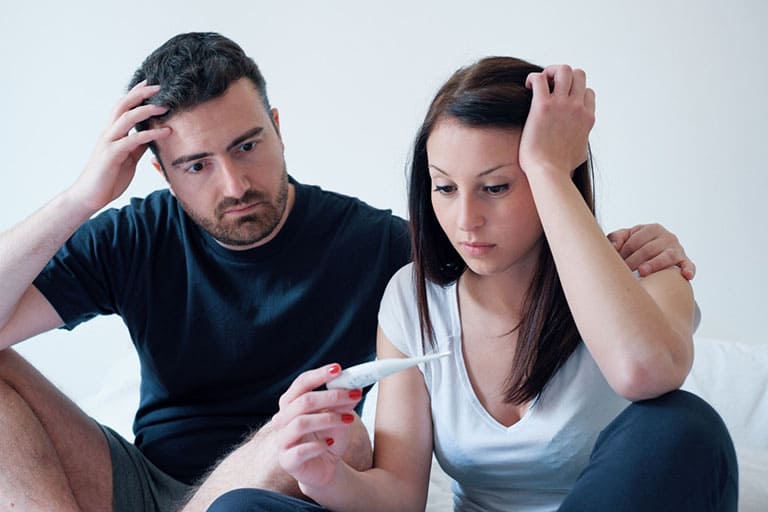
The consequences of endometriosis vary from one woman to another, but may include:
intense pelvic pain, particularly during menstruation;
pain during sexual intercourse;
infertility (difficulty conceiving);
digestive issues such as abdominal pain, bloating, constipation and diarrhoea;
chronic fatigue;
disruption of daily life and reduced quality of life.
It is important to consult a doctor if you experience symptoms of endometriosis in order to receive an appropriate diagnosis and treatment.
How kinesiology can support fertility
Kinesiology can help address the physical, emotional and energetic blocks that may be involved in infertility, in both women and men. Underlying factors such as stress, past trauma, hormonal imbalances or energetic blocks can be identified and gently released and balanced through kinesiology.
Infertility in women
Each person has their own history and lived experience. In some cases of infertility or endometriosis in women, certain emotional themes often appear around:
fears linked to childbirth;
unconscious reluctance towards motherhood;
conflicts around motherhood or with one’s own mother;
a feeling of betrayal by one’s own body;
fear that the child’s “home” will be outside the family (doubt about one’s capacity to be a good mother, fear of not having enough time to care for a child, etc.).
These fears and conflicts are often lodged in the physical body: abdominal muscles, pelvic floor muscles, certain organs or fascia may carry these tensions.
The role of fascia in infertility
Les adhérences cicatricielles peuvent régulièrement survenir à la suite de chirurgie gynécologique et abdominale. Ces adhérences peuvent créer des tensions à distance, modifier la posture à travers des compensations et dans certains cas, elles peuvent provoquer l’infertilité, des douleurs abdominales chroniques et pelviennes.
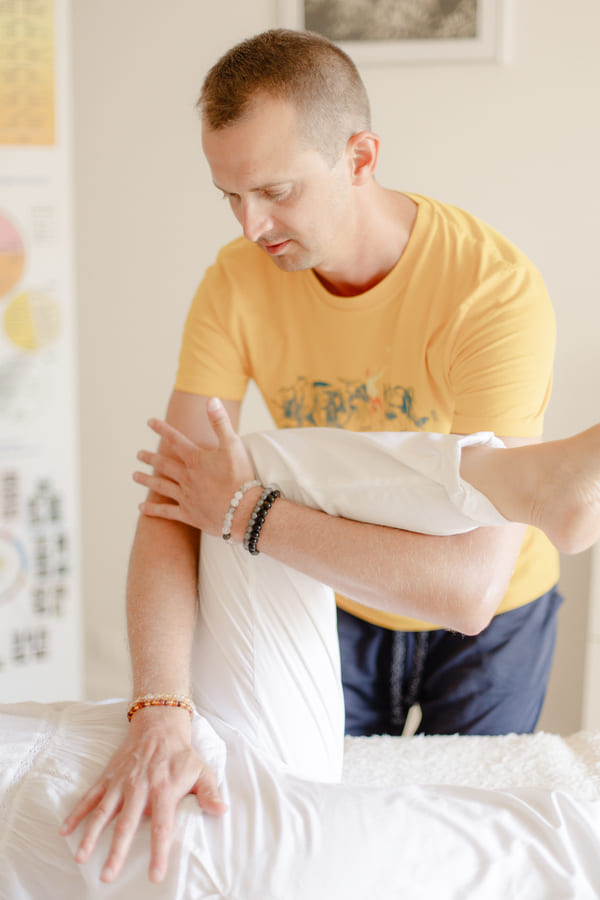
Through its approach to fascia, kinesiology can gently target problematic scars and the emotions linked to them, thus helping release residual tension. Other fascial tensions in the abdomen and uterus can also be addressed, sometimes even at a distance, since fascia forms a continuous network throughout the whole body.
It also concerns men
These themes are not limited to women. Emotional patterns related to:
a general sense of unproductivity;
fear of not being able to fulfil the role of a parent;
a family environment that feels unwelcoming;
stress linked to work, family or personal life;
fear of bringing a child into a troubled world;
fear of passing on the sufferings one has experienced, or of repeating one’s parents’ mistakes,
can also be present in men and may affect fertility.
Kinesiology and endometriosis
Calming inflammation
As with infertility, there is no single “problem → one cause” relationship. Each woman has her own story. In many cases, the emotional themes associated with endometriosis overlap with those of infertility: relationship with one’s mother, questions about the capacity to be a mother, fear of childbirth, fear of not providing a “perfect nest”, fear that the family might be fragmented or that the child’s home will be somewhere else, etc.
Endometriosis is an inflammatory condition, which often reflects emotional atmospheres of inner “fire”, inner turmoil, anger, guilt and irritability. It is therefore important to ease internal conflicts, find safe ways to express one’s opinions, and affirm one’s own identity and boundaries.
Again, these are only possible leads for exploration, carried out in a way that complements medical care; kinesiology does not replace medical follow‑up.
Links between clenched jaws and the uterus
The uterus is attached to the sacrum, an important bone at the base of the spine in the pelvis, mainly by the uterosacral ligament. The sacrum is part of the spine, articulating with the lumbar vertebrae above and the coccyx below. In osteopathy, when there are disorders of the spine, it is often observed that the temporomandibular joints (TMJs), the jaw joints, are also affected. In kinesiology, tension or dysfunction in the TMJs, which may manifest as teeth grinding or bruxism, can be explored from an emotional perspective (often unconscious anger or inner nervousness) as well as through fascial or reflex corrections often involved.
Kinesiology addresses all dimensions of the person and aims to trace back to underlying causes. In this way, uterine issues related to endometriosis may be linked to jaw tension.
You can find the website of the French association fighting endometriosis here: https://www.endofrance.org/
“If you listen to your body when it whispers, you will not have to hear it scream.” — Tibetan wisdom
Offices : Centre paramédical, 6 avenue Durante, 06000 Nice
and Herboristerie Mille et une plantes, 31 bd Maréchal Leclerc, 06310 Beaulieu-sur-Mer






James Machu - Kinesiologist

Kinesiology Privacy policy Legal notice Book now
James Machu © 2026