


What is kinesiology ?
Why consult a kinesiologist? What are the benefits of kinesiology?
What is kinesiology muscle testing?
What techniques are used in kinesiology?
Definition of kinesiology
A holistic approach
The word “kinesiology” comes from the Greek kinesis (movement) and logos (science, study), and etymologically means “the study of movement”.
Kinesiology is an integrative support method designed to restore balance in the physical, psycho‑emotional and energetic aspects of the person. It helps to release stress and distress stemming from challenging life events such as moving house, bereavement, losing a job, a separation, and so on. It also helps to develop the capacities needed to move towards one’s objectives and to learn to know oneself better.
A non-conventional or "gentle" method
Kinesiology does not treat disease itself, but fosters physical and mental wellbeing by drawing on concepts from neuroscience, psychology, Asian energetic medicine and reflex pathways, working through the body.
Indeed, kinesiology is not a medical discipline: it does not replace medicine, it does not make diagnoses, and it is not authorised to prescribe or stop any medical treatment.
Whereas a physiotherapist (a conventional paramedical practitioner) supports physical rehabilitation to restore the biomechanics of the body, a kinesiologist (“complementary therapy” practitioner) works with the person across all dimensions, paying particular attention to how emotions impact the muscular system and the body as a whole.
Kinesiology is both a science and an art. It follows precise methods, protocols and rules, and at the same time it involves a direct, personalised relationship between practitioner and client, which necessarily includes subjectivity, sensitivity, feeling and intuition.
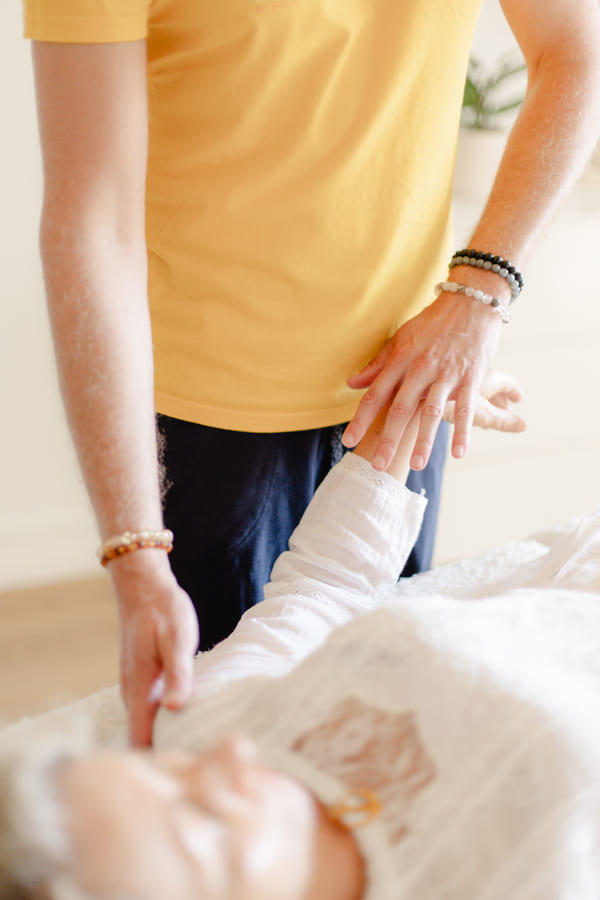
Origines of kinesiology
The beginnings of a new approach
The core of kinesiology lies in the use of muscle testing by the kinesiologist. The first traces of muscle testing date back to the early 20th century in the United States. An orthopaedic surgeon, RW Lovett, used it to analyse impairments deriving from polio and nerve lesions. Mid‑century, the Kendall couple expanded this work.
Dr George Goodheart, a chiropractor from Detroit, synthesized the Kendalls’ research and established links between specific pathologies (joint pain, organ dysfunction, etc.) and the weakening of individual muscles. He observed that restoring muscle tone through manual stimulation or by applying specific points—based on the work of Chapman and Bennett, American osteopaths in the 1930s—helped improve his patients’ health.
In the late 1960s, as the West began to explore Eastern medical approaches, Goodheart began to see possible interconnections between muscle response, imbalances in the lymphatic and vascular systems, and the meridian system of traditional Chinese medicine with its associated organs. This marked the birth of applied kinesiology.
Emergence of different techniques
The discovery of muscle testing and its application to emotional and Chinese energetic dimensions opened the door to several branches of kinesiology, including:
Touch for Health (Dr John Thie), based on the muscle–organ–meridian relationships of acupuncture;
Educational kinesiology (Dr Paul Dennison), which uses brain mechanisms to support learning;
the Three in One Concepts method (body, mind and energy), which can be summarised as a way of “defusing” past emotions that block present‑moment perception.

Kinesiology in France
The arrival of kinesiology in France
Kinesiology has gained popularity worldwide, especially in Anglo‑Saxon countries (United States, Canada, Australia, New Zealand). It has also been developed in Germany, Switzerland and Spain.
Kinesiology entered France notably through the work of Rabia and Jean‑Claude Guyard, founders of the Centre d’Études en Médecines Douces in 1976. They actively helped transfer this knowledge from the United States to France and other European countries, drawing on their own experience in physiotherapy, osteopathy, psychology, yoga and more. In 1989 they founded the first kinesiology school in France, the EKMA (École de Kinésiologie de Médecines Alternatives) in the Essonne region.
The limitations and risks of kinesiology
Like any non‑conventional health approach, kinesiology is not free from controversy. Applied kinesiology, in particular, has a relatively critical French‑language Wikipedia page. As mentioned above, it is essential to stress that kinesiologists are not health professionals trained to diagnose or treat medical conditions. The role of kinesiology is not to manage people in a pathological state.
However, kinesiologists may encounter cases of distress that are not fully addressed by conventional medicine—distress that is subjective but very important from the perspective of a person’s long‑term health. Observing a professional code of ethics is fundamental, and the kinesiologist must place the client’s wellbeing and autonomy at the heart of their practice.
Kinesiology as a developping profession in France
Since the founding of EKMA at the end of the 1980s, training centres and the number of practitioners have multiplied. In 1992 the French Federation of Kinesiology (FFK) was established, with the aim of organising this emerging profession, ensuring the quality of training and upholding legal and professional standards.
In the face of the non‑official, non‑regulated status of kinesiology in France, several federations of schools and practitioners, as well as professional associations, have emerged to demonstrate the value of kinesiology as a complementary, non‑conventional method that plays a significant role in overall wellbeing.
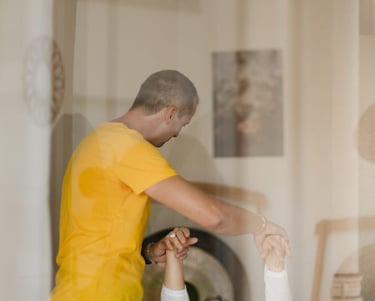
“If you listen to your body when it whispers, you will not have to hear it scream.” — Tibetan wisdom
Office : Centre paramédical, 6 avenue Durante, 06000 Nice






James Machu - Kinesiologist

Kinesiology Privacy policy Legal notice Book now
James Machu © 2026