


How I support sportspeople in kinesiology ?
Training programmes, strength training, stretching, recovery sessions, massage, tailored nutrition: sportspeople are advised on many fronts to maximise their performance.
What about complementary therapies? Can sportspeople call on these approaches? Kinesiology in particular can contribute to better sports performance. Here’s how:
Reasons sportspeople consult a kinesiologist
Supporting repeated sports injuries
Sprains: these are injuries affecting the ligaments of a joint. Joints represent flexibility and the capacity to adapt to different situations. A sprain can be linked to resistance, blocks or feelings of insecurity. This mental tension can be mild (a simple twist) or represent a true rupture or tear (ligaments torn or severely strained).
Tendinitis: this is inflammation of a tendon, the connection between muscle and bone. Tendons represent the capacity to adapt to circumstances, flexibility (or rigidity). Tendons can become inflamed when there is an inner conflict—for example between what a person feels they must do and their inner voice—or when there is devaluation, apprehension or a feeling of powerlessness.
Muscle pain: muscles create movement, and movement represents life. They symbolise action, progress and vitality. In kinesiology, we take into account both agonist and antagonist muscles (for example biceps and triceps). Whatever movement is performed, the agonist and antagonist work together. When one muscle is energetically weakened, it can increase tension in its opposing muscle, leading to pain, compensations and less precise movement.
Overcoming emotional blocks
Stress: in sport, performance depends not only on skill and technique but also on your mental state. This can be affected by stressful events such as a break‑up, bereavement, or work pressures. Calming your general state can significantly boost performance.
The fear of failure or of success: every person relates differently to performance. We all have performance criteria, but we may not have chosen them consciously. Failing—or even succeeding—can unconsciously feel impossible, linked to a sense of punishment, which can make someone “lose form” or “freeze” at a decisive moment in a match.
Lack of self‑confidence: fear of judgement, pressure, frustration and many other factors can affect confidence and, consequently, sports performance.


Performing difficulties
Motor skills and coordination: stress and emotional tension can affect muscle tone, the flexibility of fascia, and communication between the brain’s two hemispheres, each of which controls movement on the opposite side of the body. Coordination, proprioception and balance may become unstable, so movements become less precise and efficient.
Physical recovery: muscle testing, stress management, energy balancing and relaxation techniques are among the tools a kinesiologist uses to support athletes according to their needs, optimising recovery and helping prevent injuries.
Managing fatigue: as with physical recovery, several tools can help make rest periods more effective and ensure that sleep is restorative. It is important to support the athlete overall, helping them manage their energy more sustainably.
The benefits of kinesiology for sportspeople
A holistic approach
Taking the body as a whole into account: kinesiology considers all dimensions of the person: physical, emotional, mental, energetic (in the sense of Chinese medicine) and spiritual.
Balancing body and mind: kinesiology is a psychosomatic approach that helps the client regain a sense of agency over both their physical body and their mind, which are the two sides of the same coin.
Improving overall health: reducing stress, releasing emotional burdens and balancing energy enables the body to reach an optimal state of homeostasis and to move towards better mental health.
Personalised support
Every kinesiology session is fully tailored to the individual, their history and their current health. The session objective adapts to the athlete’s needs. A customised programme can be created to reinforce a new balance and help the athlete become more autonomous. Regular follow‑up sessions can explore issues more deeply and adjust support as progress is made.
A preventive approach
Kinesiology does not replace conventional medicine. However, many minor discomforts, tensions and everyday stresses do not fully find solutions within conventional medicine. Identifying an issue and easing it before it becomes a full‑blown functional disorder can help prevent injuries, better manage stress and optimise performance without a drop in form.
Kinesiology in support of professionals
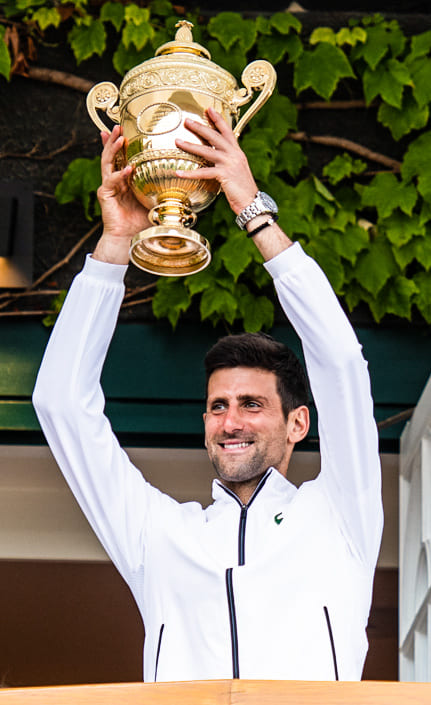
Lionel Messi and Novak Djokovic
Two iconic sportspeople have used kinesiology in their high‑level careers: Lionel Messi, the Argentine footballer and eight‑time Ballon d’Or winner, and Novak Djokovic, tennis player and 24‑time Grand Slam champion.
Although kinesiology is not officially recognised by conventional medicine and remains controversial for some, both athletes have spoken publicly about the benefits they have experienced. They are joined by many other high‑level athletes who use kinesiology as a complementary support.
How does the support work ?
Support is fully personalised according to the athlete’s schedule, competitions and any rehabilitation process. First, it is important to define short, medium and long‑term objectives. Depending on priorities, several themes can be explored for gradual improvement in performance:
Working on the athlete’s weaker areas
Managing pain and tension
Releasing emotional blocks
More information on how a session works.
Sessions can also be organised during sports events, for example in hotel rooms. For more details, see here or contact me directly.
Post session follow-up
As mentioned above, a tailored programme can be created after a session to maintain and reinforce changes, helping to avoid relapses. Follow‑up sessions can be put in place, and possible collaborations with other therapists and sports coaches can be arranged, depending on the athlete’s progress and ongoing needs.
“If you listen to your body when it whispers, you will not have to hear it scream.” — Tibetan wisdom
Offices : Centre paramédical, 6 avenue Durante, 06000 Nice
and Herboristerie Mille et une plantes, 31 bd Maréchal Leclerc, 06310 Beaulieu-sur-Mer






James Machu - Kinesiologist

Kinesiology Privacy policy Legal notice Book now
James Machu © 2026