


How a kinesiology session works
What happens in a kinesiology session ?
Here are the main stages of a typical kinesiology session:
Case history: an initial conversation at the start of the session
Setting up the muscle test
Identifying the main theme for that session
Exploring psycho‑emotional, physical, biochemical and energetic factors linked to that theme
Restoring balance and releasing blocks
Checking that the theme no longer presents as stressful
Suggesting post‑session exercises to help integrate the changes
The session begins with listening to your request
Booking a kinesiology session
The first step towards feeling better starts the moment you book a session. You consciously decide to take care of yourself and allow yourself to be supported. You acknowledge your own issues and begin a process to regain balance.
Although I offer online booking, I am also available by message or phone if you would like to discuss your situation and whether kinesiology could be a suitable approach for you. If the session takes place at your home, we may need to check a few practical details beforehand.
Case history
At the appointment, the session always begins with a short conversation so I can better understand your situation, your expectations and how you are feeling at that moment. This is the time when I collect the information needed for the session, such as any relevant medical history or other context.
This conversation is in no way intended to establish a medical diagnosis, which is not the role of the kinesiologist. If necessary, I will briefly remind you of the principles of kinesiology and explain how the session is likely to unfold.
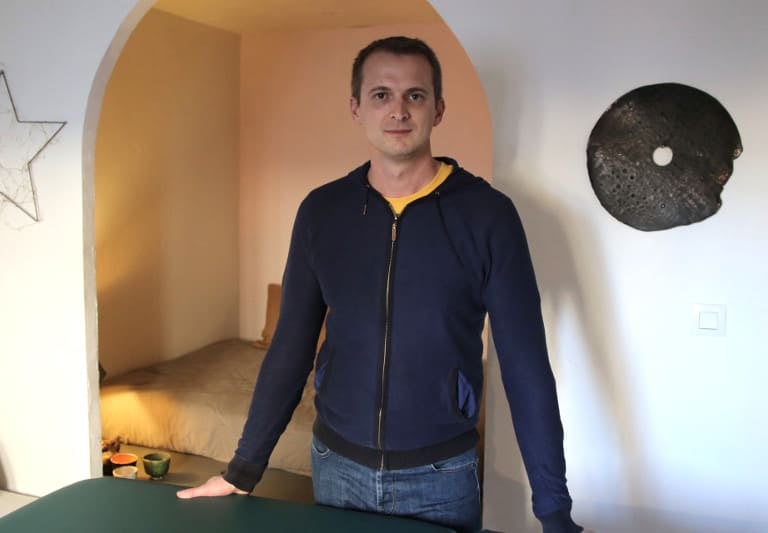
It is preferable to wear comfortable clothing for the session. Avoid jeans, skirts or dresses. You will be sitting or lying down, but will remain fully clothed throughout.
Kinesiology "makes the body speak"
Setting up the muscle test
At this stage, I establish a kind of dialogue with your body through gentle muscle tests, usually starting with muscles in the arm and shoulder. These tests are never painful. We begin with a few calibration tests to check that the muscle test is reliable; it will then be the main tool for the rest of the session.
The muscle test is the basic tool of the kinesiologist and helps to identify sources of stress within the body.
More information on muscle testing
What is the body saying about your request ?
Starting from your main request, the muscle test guides us towards what is happening beneath a given problem.
For example, tension in the shoulders or back may hide relational tension in a couple; or sleep problems may be linked to stress at work or an upcoming move. Often, the underlying issue is not fully conscious.


I maintain a verbal dialogue with you—without entering into psychological analysis—while keeping the muscle test as our main “compass” to identify the main theme for the session.
As certain topics are approached, your body may begin to express itself (tightening, feeling hot or cold, trembling, tension in the stomach, a knot in the throat, etc.).
The session theme is often summed up in a short “goal phrase”: a desired state that feels unreachable or highly stressful at the moment.
Exploring the causes of the session theme
Why is this desired state currently out of reach? What is it that makes a tension appear in a relationship, or makes a situation stressful for you at work (even though it may not be for your colleagues)? This is where the exploration begins, always guided by the muscle test.
The test leads us into your history and helps to identify the sources of stress and what conditions the way you experience events today: belief systems, somatic memories, repetitive transgenerational patterns, blocked emotions, and so on.
In my approach, kinesiology can involve psycho‑emotional, physical, biochemical and energetic dimensions, working for example with muscle memories, fascia, the meridian energy system (traditional Chinese medicine), reflex pathways, and more.
Different balancing corrections are then applied during the session to release these patterns and blocks, and make space for the desired state.
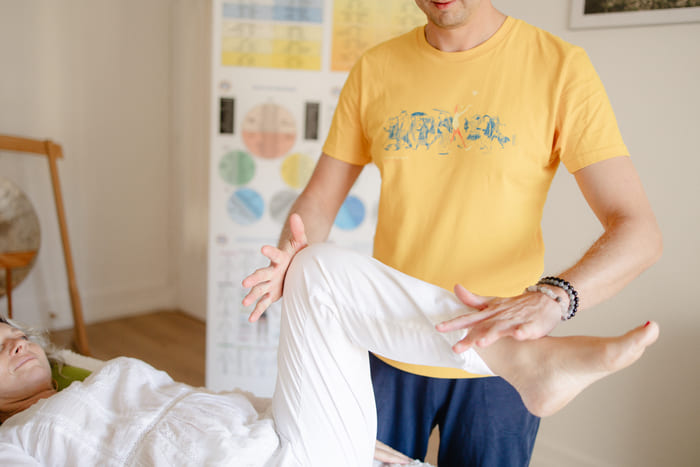

Types of balancing techniques used in kinesiology
Exemples de techniques utilisées
Voici une liste non exhaustive de techniques d’équilibration utilisées en séance :
Défusion de stress émotionnel par mouvement oculaire (semblable à l’EMDR). Défuser est l’idée de dissocier une émotion d’un stimulus comme une odeur, un mot, une sensation…
Remise à l’équilibre des méridiens par l’utilisation de points spécifiques à la kinésiologie ou des points d’acupuncture
Réalisation de mouvements spécifiques : d’étirement, de réveil énergétique, de coordination droite-gauche
Techniques de respiration, ou encore de visualisation
Stimulation simple de voies réflexes ou de fascias
End-of-session checks
At the end of the session, I check whether bodily tension has eased, whether the identified patterns no longer represent a source of stress, and whether the session goal seems closer. I also check that the body areas involved and the relevant energetic systems are in balance.

After the session

Integrating the session
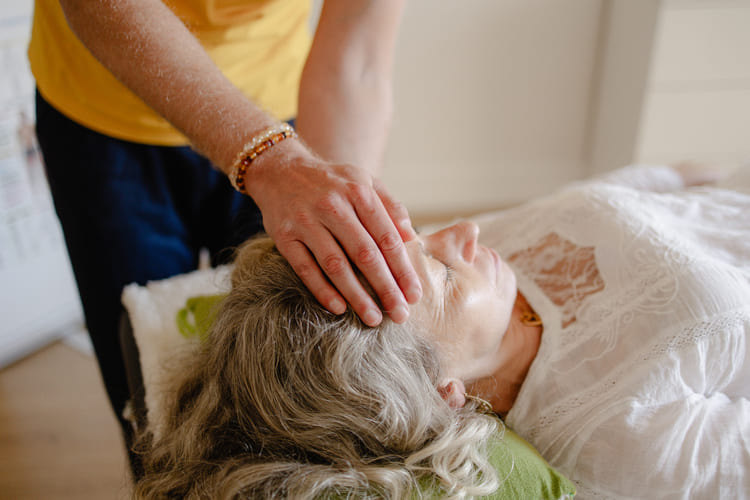
It can take a few days or even a few weeks for the body to fully integrate the changes. Your system settles into its new balance at its own pace. You may be given anchoring exercises (repeating certain phrases, simple movements, meditations, or breathing practices) to help you anchor the changes from the session.
Some people notice post‑session sensations such as flashes of awareness, memories resurfacing, emotions releasing, or temporary tiredness. It is often recommended to schedule a calm, relatively quiet period after a session.
How many sessions are needed ?
After each session, it is important to notice the changes in your body and your mind. Things will shift in relation to your initial request. For deeply rooted issues such as addictions, several sessions may be needed. It is up to you to feel when you are ready for another session.
Often, a single session can already bring clear results. In general, two to three sessions are useful to consolidate and stabilise a change.
Case example
In June 2023, an elderly person consulted for persistent shoulder pain that had not improved despite several physiotherapy sessions. One kinesiology session was enough to bring lasting relief. The client then returned to work on other physical tensions and on disabling tics, showing how kinesiology can support ongoing adjustment.

Client testimony on a kinesiology session
“I had a session with James (my first experience of kinesiology), and I was amazed by the precision of the method and the way James listened, interpreted and supported the process.
In a very welcoming and attentive atmosphere, the session unfolded almost like a scroll that the practitioner and I unravel together. The body guides, indicating where integration is needed.
The back‑and‑forth between what I felt as ‘body memories’, the deductions and corrections suggested by the kinesiologist, and my own experience, deeply re‑balanced me in areas I knew were wounded and had been patched up as best I could.
By welcoming and rebalancing these ‘zones’ within me, I now experience far less spontaneous emotion or unconscious programs arising when situations trigger these areas of discomfort. I feel more at ease, freer and more kindly towards myself and others, and closer to who I actually am.
Thank you, James, for the quality, depth and gentleness of the session.”
- Olivier (Google review)
“If you listen to your body when it whispers, you will not have to hear it scream.” — Tibetan wisdom
Office : Centre paramédical, 6 avenue Durante, 06000 Nice






James Machu - Kinesiologist

Kinesiology Privacy policy Legal notice Book now
James Machu © 2026